Picture a double-decker bus with two trolley poles on the roof, running past a queue of diesels at the kerb in near silence. For about forty years that was an ordinary sight in dozens of cities, from London to Bradford, and the vehicles carried millions of passengers a day on current drawn from wires overhead. Today the type is effectively extinct in revenue service. The reasons it rose and fell say a lot about how cities choose their transport.
A bus that borrowed from the tram
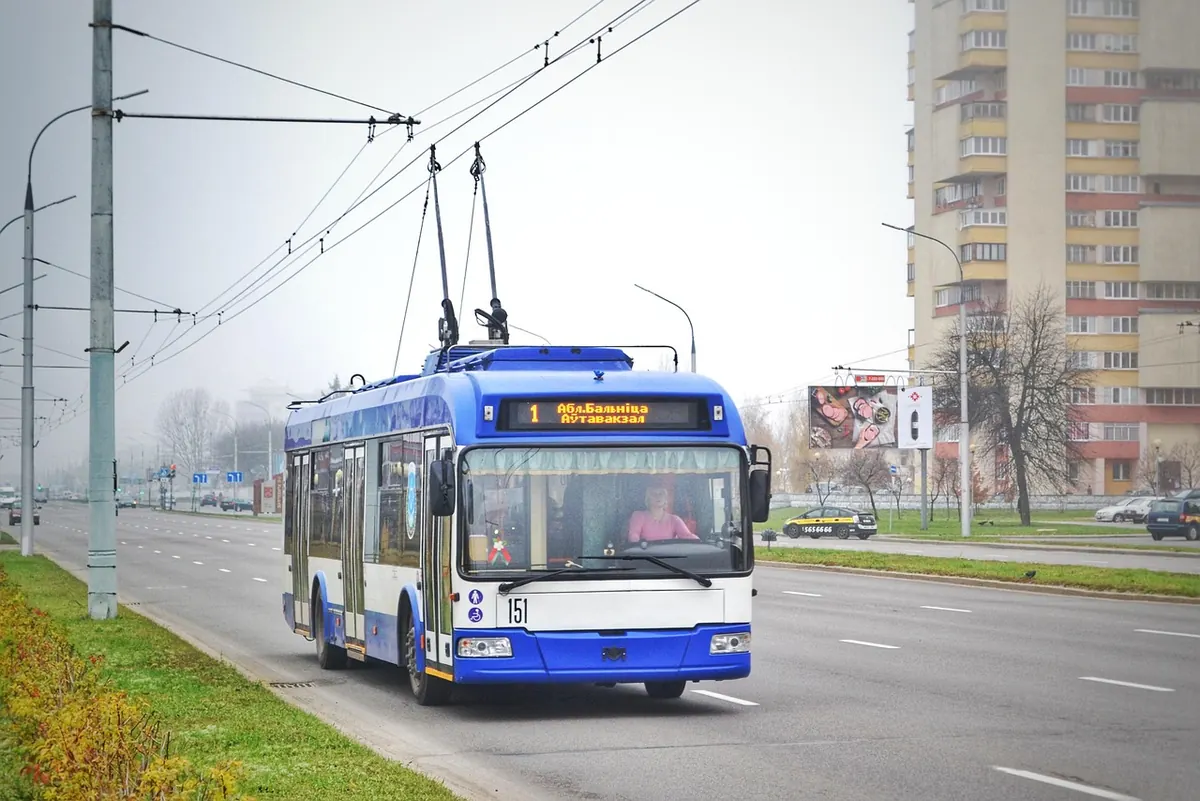
The trolleybus is a tram minus the rails. Instead of returning current through steel track, it uses two overhead wires and two poles, which is why a trolleybus always needs a twin-wire supply. That sounds like a small detail; in practice it shaped everything about the mode.
The timing was right. Through the 1920s and 1930s, tram tracks in Britain were worn out, and relaying them through narrow streets was expensive and disruptive. The power stations, cables and depots already existed, though, and overhead wire was far cheaper to install than new track. A trolleybus could also pull into the kerb, swing round a parked lorry, and climb hills that left early diesel buses grinding in first gear. Add two decks and you had a vehicle carrying twice the passengers of a single-decker without needing a bigger footprint on streets laid out for horses.
Where they ran
London was the flagship. The first routes opened in the early 1930s in the south-western suburbs, and the network expanded as tramways were converted. By the late 1930s London had the largest trolleybus fleet in the world, close to 1,800 vehicles at its height, and every one of them was double-deck. Outside the capital came Bournemouth, Hastings, Reading, Ipswich, Nottingham, Portsmouth, Maidstone, Walsall, Bradford, Glasgow and many smaller municipal systems. Some of these were almost entirely two-storey fleets.
Britain was the biggest market for double-deck trolleybuses by a wide margin, but the type also ran in Continental European cities. Elsewhere, single-deckers were the norm, often because tunnels, low bridges or loading rules ruled out a second storey.
What the machines were like
Most were built on chassis from established makers — AEC, Leyland, Crossley, Sunbeam, British United Traction — with bodies from the same coachbuilders who supplied motorbuses: Weymann, Park Royal, Metropolitan-Cammell, Brush, Roe. Typical features of a two-axle British double-decker trolleybus:
- Two roof-mounted trolley poles, raised and lowered by ropes led down to the rear platform
- A traction motor driving the rear axle through a conventional propshaft
- Electric heating, since there was no engine waste heat to recycle
- Seating for roughly 56 to 70 passengers, depending on length and layout
- On some designs, regenerative braking that fed current back into the wires on descents
- Occasionally a small battery to move the vehicle slowly around the depot off-wire
London went further than most, ordering three-axle six-wheelers for its busiest routes to get capacity and stability out of a two-storey body.
The operational pinch points
Double-deck trolleybuses were quiet, smooth and quick off the mark, and drivers liked them. The trouble sat overhead.
Because the return path runs through a second wire, every junction needs crossings and frogs so the poles can pass from one set of wires to another. These are precision pieces of work, and they are unforgiving: take a wrong turn at a complex junction and the poles come off the wire. That is a dewirement, and the driver or conductor has to get out, take a pole hook or rope, and put the poles back on live wire — usually in traffic. Do it in the middle of a busy crossroad at five o'clock and you have created a queue within seconds.
The same rigidity applied to the route itself. Roadworks, a burst water main, a one-way change: a diesel bus simply diverts. A trolleybus needs a pre-wired alternative or it stops. Extending a route to a new housing estate meant substations, feeder cables and weeks of overhead work, while a motorbus just drove there.
Money, rather than engineering
Vehicle for vehicle, a trolleybus cost more than a diesel bus of the same capacity, and the saving on fuel only paid that back on busy routes with cheap electricity. That trade looked sensible in the 1930s and much less so after the war, when diesel buses became lighter, more reliable and cheaper to buy and staff. Renewing a trolleybus fleet also meant renewing the overhead, the substations and the depot wiring at the same time. Once operators counted that in, the case for carrying on thinned out quickly.
How the networks went
The retreat came in stages, and the pattern repeated in city after city:
- Post-war vehicle shortages kept the trolleybuses running longer than planned.
- Cheap oil and improving diesel designs made replacement buses attractive.
- Suburban expansion pulled routes beyond the wires, and mixed operation with diesels on the same route eroded the cost advantage.
- Each fleet renewal became an all-or-nothing decision about overhead as well as vehicles.
- Conversions gathered pace, and the remaining systems lost the shared pool of spares, expertise and training.
- By the time fuel prices spiked in the 1970s, most of the networks had already gone.
The last stands
London, the largest system of all, was converted in a wave of closures that ended in May 1962. Nottingham followed in 1966, Reading in 1968, Bournemouth in 1969 and Walsall in 1970. Bradford held out until 1972, when the last trolleybus in Britain ran. In several European cities the wires stayed up far longer and some systems still operate today, but they run single-deckers. As a working class of vehicle, the double-deck trolleybus is history.
Seeing the survivors
Plenty of the story is still there to look at, and a few vehicles still earn their keep on open days.
- Sandtoft Trolleybus Museum in Lincolnshire holds the largest collection in Britain, with a site wired for operation and rides on selected days.
- The East Anglia Transport Museum at Carlton Colville runs trolleybuses and trams along a short route in a recreated street setting.
- Preserved examples from London, Bradford and other municipal fleets appear at transport museums and rallies around the country.
Two practical tips before you go. Check operating dates first: trolleybus running depends on volunteers, weather and vehicle availability, so a phone call or a look at the museum's calendar saves a wasted trip. Then spend a few minutes staring at the overhead wiring rather than the bus. Find where two wires cross at a junction, look for the section insulators that keep one stretch of line separate from the next, and you will see the whole rise and fall of the double-decker trolleybus in a single piece of street furniture.
Photo: EPr-666 / Pixabay